





FPV drones: a growing threat in modern warfare
FPV (first personal view) drones are reshaping modern warfare. Fast, precise, and difficult to detect, they have become a persistent threat on the battlefield, constraining movements and directly exposing frontline units.
As this threat continues to evolve, armed forces are facing a critical need: counter-drone solutions that are more mobile, more affordable, and scalable for mass deployment.
A strategic French partnership to strengthen defense sovereignty
In this context, during Eurosatory 2026, Shark Robotics announces the signing of a Memorandum of Understanding (MoU) with IRIS Lab, marking the beginning of a strategic collaboration between two innovative French defense companies.
This partnership reflects a shared ambition to strengthen technological sovereignty and to contribute to the emergence of a new generation of counter-drone capabilities, designed to meet the operational realities of modern conflicts.
Laser-based counter-drone technology against FPV threats
IRIS Lab is developing an autonomous laser turret capable of neutralizing FPV drones at a distance of up to 500 meters in less than three seconds. This technology combines high precision and rapid response, two critical factors in countering fast-moving aerial threats.
Towards mobile and scalable counter-drone systems
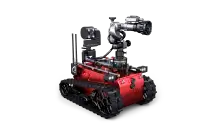
As part of this agreement, Shark Robotics and IRIS Lab will explore the integration of this system onto the BARAKUDA multi-mission ground robot. The objective is to design and test a new type of counter-drone solution that is:
- Mobile
- Fast
- Precise
- Cost-effective for large-scale deployment
This partnership, among the first of its kind in France, represents a significant step toward offering a credible alternative to existing systems, which are often expensive and difficult to scale.
Addressing an ever-evolving threat requires the ability to think and innovate at the speed of the battlefield in order to effectively support those operating on the front line.
